Some evenings, after the dishes are done and the kids are in bed, my husband likes to play video games. I’ll often keep him company, sitting on the couch and offering running commentary interspersed with advice of questionable utility.
Most recently, he’s been playing the latest Legend of Zelda (LoZ) game. As someone who devoted many hours of my youth to defeating the first LoZ, the current iteration feels foreign. Gone are the 8-bit graphics and endlessly repeating music, replaced with advanced animation and a full-blown score.
Although I would hardly describe this current season of my life as an epic adventure, I identify with Link. His world, Hyrule, has been upended and it will take him going on a long and difficult journey to restore it. Along the way, he meets some new people and learns some new tricks. It’s a quest that calls for resourcefulness and patience.
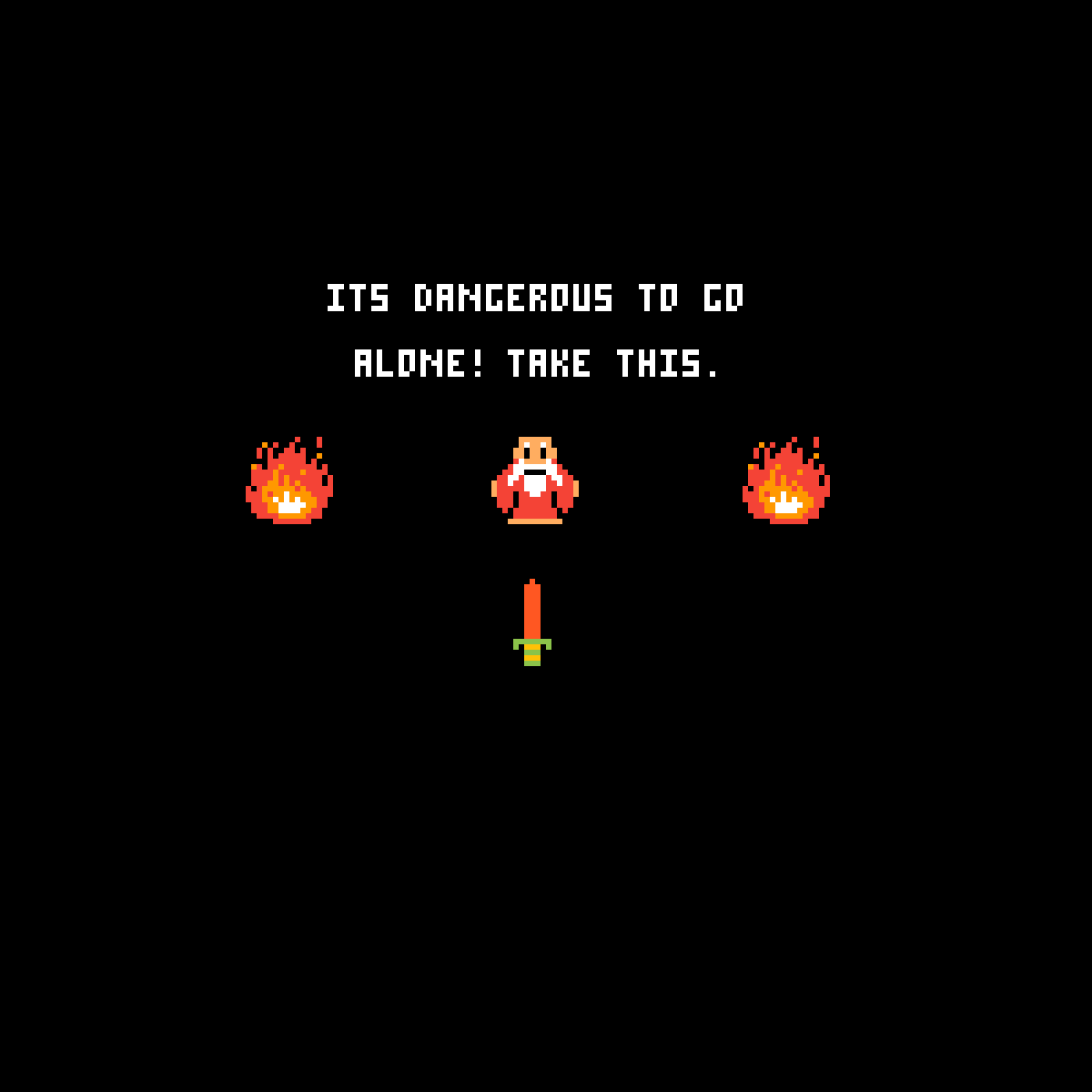
As I move through this process of recovery, I think about the first screen of the original LoZ game. At the top, on the left, is the entrance to a cave. Inside is a man with a fire on either side. In front of him sits a wooden sword. His message? “It’s dangerous to go alone. Take this!” Like Link, I’ve got tools to help me. Best of all, I am not alone.
From history major, with side quests in Medieval Studies and chemical engineering, to nonprofit finance leader, Big 4 tax partner, technologist, researcher, and now co-founder of Divine, nothing about my career has been linear. The throughline has always been systems: financial systems, organizational systems, technological systems, and human systems. I have an MBA in Operations and Supply Chain Management and a PhD in Organizational Leadership Psychology, and I’ve spent my career trying to understand how complex systems shape people’s choices, opportunities, wellbeing, and sense of belonging. Today, my work sits at the intersection of psychology, technology, human-centered design, and digital trust. I am co-founder of Divine, an open-source, decentralized social video app built to put creativity back in human hands and replace doomscrolling with joyscrolling. Divine is part of a bigger question I care deeply about: how do we create online spaces that support safety, creativity, identity, and belonging without defaulting to surveillance, extraction, or control? At Divine, I wear a lot of hats across engineering, finance, operations, and strategy, while helping shape the app’s trust, safety, and values work. I focus especially on teen online safety, human-generated content, participatory design, and healthier relationships with technology. I am a postdoctoral alum of Vanderbilt University’s Department of Computer Science, where I worked with Dr. Pam Wisniewski’s Socio-Technical Interaction Research Lab. I continue to write, speak, and research at the intersection of online safety, digital trust, decentralized technology, and youth wellbeing. I was named a Distinguished Fellow at the Institute for Data Integrity in 2023. In 2025, I had the honor of serving as President of Division 13 of the American Psychological Association, the Society of Consulting Psychology. I also live with major depressive disorder and obsessive-compulsive disorder. In 2020, I took a leave from PwC to focus on my mental wellness, and I now speak and write openly about mental health, especially in the workplace and in relation to digital wellbeing. This blog, Seriously Jerk Brain, chronicles much of that journey.
View all posts by liz
1 Comment
Wonderful analogy, and no, you are not alone – I love the saying “If you want to go fast, go alone. If you want to go far, go together”
Then the journey becomes as important as the destination ❤


 Seriously, Jerk Brain?!
Wonderful analogy, and no, you are not alone – I love the saying “If you want to go fast, go alone. If you want to go far, go together”
Then the journey becomes as important as the destination ❤
LikeLike